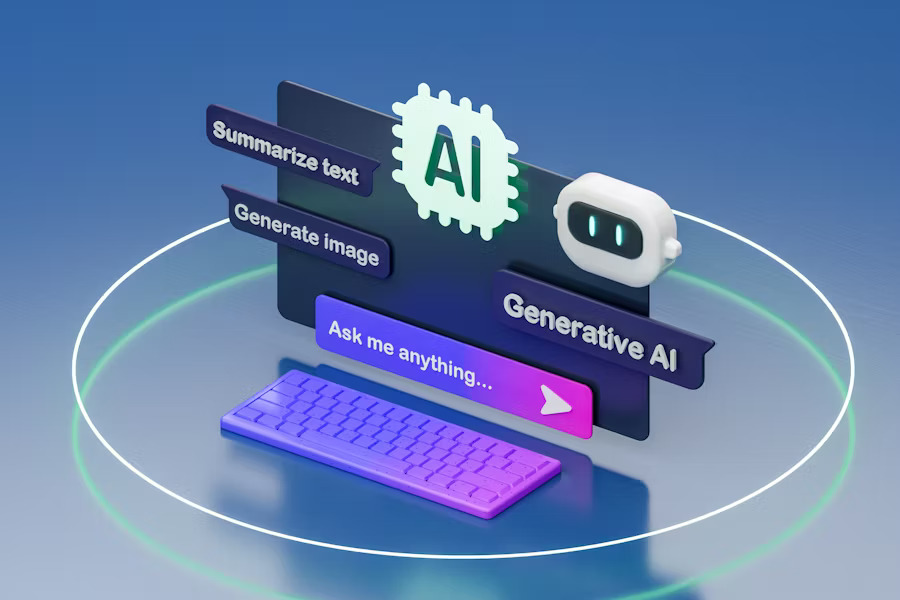

You need to understand AEO, GEO, and AIO right now because ranking number one on Google doesn’t guarantee anyone will see you anymore because AI tools like Perplexity, ChatGpt, Google AIO, and Gemini are now giving answers before people ever see your website and no one else is explaining it properly. ( This is according to Vendasta)
And if you ask the average marketer or business owner, “Has any of this actually changed how you create content or get customers?” Most of them have to say, “Not really.” They’re confused, overwhelmed, or just ignoring it. But once I explain this to a business owner, they realize they can quietly get ahead of 99% of people who are freaking out about these acronyms.
It’s like something unlocks in their brain. They suddenly realize, “Oh, this is how I show up in AI overviews and chat GPT, get cited by generative summaries, own featured snippets, and shape what AI tools say about my brand.” We’ve only broken down our approach a handful of times with clients in DMs, a podcast or two. And every time people say, “Why has nobody explained it this simply before?” So that’s what I want to give you, an immediately actionable guide to AEO, GEO, and AIO, what they actually mean, and the exact ranking factors AI uses when deciding what businesses it talks about. My goal by the end of this video is simple. make you the business AI chooses, confidently recommends, and talks about. So, grab your coffee. Let’s go.
So, now that we’ve set the stage for AI search, we need crystal clear definitions.
What is AEO?
Simply Answer engine optimization. Think about when you Google, “How often should I service my furnace?” You don’t scroll or click on blue links anymore. Google shows you that AI overview box at the top. AEO is when you ask, “How do I become the brand AI tools keep citing when people ask questions like this?” If your brand is cited in that box or linked as one of the sources feeding that answer, congrats. That’s AEO.
Understanding GEO
This is Generative engine optimization. And this is where most SEO strategists get lost. GEO doesn’t mean how do I rank this blog post, but rather how do I get recommended when someone asks an AI what to buy? Picture this. Someone goes to chatgpt or perplexity and types. What’s the best tool for a 10p person marketing agency? Instead of sharing one snippet from one site, the AI reads multiple pages, breaks the question into sub questions, synthesizes an answer in its own words, and maybe cites two or three sources. And if one of those is your business, that’s GEO working.
The AIO
AIO stands for AI optimization. Basically, it’s making sure that ChatGpt, Perplexity, Gemini, Claude, and all these AI tools actually know your business exists. So, the question becomes, when someone asks an LLM for the best roofing service near me, is it going to recommend your business or send everyone to the next competitor? AEO is getting your words pulled into the answer, while GEO is getting your business chosen by AI, and AIO is getting your brand understood by AI.
Now, you must be thinking, “Do I really need to track all three?” Yes, you do.
Because this is where you quietly lose or win revenue. If you only watch one section of this video, make it this one, because this is where we expose the gaps most SEO dashboards will never show you.
First, you might be showing up AEO, but never getting chosen, GEO. If someone asks Google SGE or search generative experience, best accounting software for freelancers, you rank in the top three on Google. You even have the featured snippet.
But if your pricing is vague, your features aren’t clear, your reviews are weak, and your use cases aren’t obvious, AI will still recommend your competitor. On paper, your SEO looks great. In reality, the money leaks out at the GEO layer. Or you might have the best product, but AI doesn’t understand your brand. your AIO. If your info is outdated on Wikipedia, inconsistent in directories, missing on review sites, or contradicted by your own about page, AI skips you simply because it isn’t confident talking about you. That’s what AIO is really about. Filling in those brand knowledge gaps that silently cost you sales.
Or your competitors might be getting recommended without ever outranking you. You could own a page one for best gym in Seattle, but when someone asks ChatGBT, should I get a Pelaton or join a local gym? If your competitor has clearer positioning, better reviews, a stronger about page, and more PR, AI will say their name, not yours. And no SEO dashboard will show you that unless you’re specifically tracking it. So, if you’re not measuring all three, you’re not just losing to competitors, you’re losing to the AI’s assumptions about your business. Before we move on to AIO, hit that like button.
It genuinely helps our channel grow and it helps other people who are struggling with the same questions find the answers faster. Now, let’s get practical. What do you actually change on your pages, content, and brand so AI picks you.
AEO is about making it effortless for an LLM to include you in the citations it summarizes. And it starts with knowing the exact questions people in your industry are asking. Tools like answer the public or also asked work. Or you can take your competitor’s paid search data or your own, drop them into chat GPT and say convert these to questions people would ask and then supplement that with the real world sales calls, support tickets, Reddit threads, and community posts. But honestly, just listen. If five customers a week ask your HVAC company, “Why is my AC blowing warm air?” That’s a piece of content right there. Those questions shape the videos you create, the Reddit threads you join, the help center articles you publish, and the partners who review your product.
The more of the questions that you answer, the better, because an LLM’s top answer is usually the brand mentioned the most. Also, when it comes to AEO, structure matters more than people realize. LLMs aren’t trying to figure you out. They’re trying to extract clean answers. Now, if your H2 heading literally says, “Why is my AC blowing warm air?” LLMs don’t have to guess what question you’re answering, especially when you answer the question directly, immediately, and in about 40 to 60 words. No story, no fluff. That’s the whole game. That one clean paragraph is what LLMs want to steal. Then you can explain the details underneath, but you always open with the answer first approach. But here’s the twist. That answer shouldn’t live only on your site.
LLM trust the crowd. They want YouTube explainers, Reddit opinions, affiliate reviews, customer forums, and support docs, all reinforcing that you are the right answer. So, the formula for winning in AEO becomes find the real questions people ask. Create the clean answer first section on your page.
Replicate that answer across YouTube, Reddit, blogs, and help docs. Show up in as many citations as possible. And keep everything fast, readable, and trustworthy. [snorts] Next, GEO. Make it easy for AI to choose you. GEO is where things get interesting because now you’re not going to be the answer.
You’re trying to be the recommendation.
So, here’s the simplest way to think about GEO. If AI were your friend giving someone advice, would it feel confident recommending you? That confidence comes from two places, fitness and synthesis.
Let’s say you run a small neighborhood gym. Fitness signals are the things that make AI think, “Okay, this place isn’t sketchy. I can safely suggest it without embarrassing myself.” So, instead of your website saying, “We offer affordable memberships,” you’d have clear use cases,, transparent pricing, deep feature pages, honest comparison pages, reviews, and testimonials, real case studies, success stories, and clear positioning.
If your brand looks real, specific, and trustworthy, AI is far more likely to include you in the recommendation set. Now, let’s talk about the actual content AI pulls from.
Imagine someone types Pelaton versus gym membership for weight loss in SGE or a chat GBT. The AI will probably generate a comparison, pros and cons, costs, and what type of person each solution is best suited for. If you’ve already created that exact content on your website, cleanly structured, you’re in the conversation.
Here’s what makes your content AI friendly. Comprehensive, in-depth pages, simple, readable language with short sentences and clear points. Topical authority, which means crafting a whole cluster about fitness options, declarative facts because AI loves quoting numbers, tables, sections, lists, fresh timely content, updated screenshots, recent pricing, new class types, unique insights like your own data comparing average results between different programs. And when your content matches how AI structures its answers, AI uses it. And once you’re used in the answer, your chances of being recommended skyrocket. Okay, so AIO. AIO is the layer nobody wants to talk about because it exposes a brutal truth. AI can’t recommend you if it doesn’t know you exist.
AIO isn’t about ranking a page. It’s about your entire footprint across the internet. The stuff that teaches AI who you are, what you do, and whether you’re a legit brand or a digital tumble weed. Imagine you run a pizza place called Peppy’s Pizza.
AIO is not about creating one blog post or one landing page. It’s the sum of everything about your business that exists across the web, including your website, your reviews, your social media, your listings, your PR, and even your Yelp arguments with your local spicy Karen.
All of it becomes part of the brand memory AI develops about you. So, let’s break it down. Number one, structured brand data. So if your website basically says Peppy’s pizza, best pizza in town, AI is going to wonder best according to who? Your mom.
Instead, to strengthen your AIO, you need to feed AI the exact ingredients it needs to build a reliable knowledge card about you. That includes a schema markup telling AI, “Yes, I am a pizza restaurant. Yes, I serve Neapolitan style pies. Yes, we deliver.
Yes, we’re open late.” or a real about page with details like founded in 1998, family-owned, woodfired, oven imported from Naples. Not to mention consistent business info everywhere. Same address, same hours, same phone number. These details make up your structured data layer. Next up is your authority ecosystem, or where else do you show up?
This is where AIO gets fun because now we’re talking off-site signals. You could have a perfect website, but if the rest of the internet is silent, AI has no idea whether you’re real. Authority signals include news mentions, awards, review sites like Yelp, Trip Adviser, and Google reviews since these matter more than backlinks. Now, appearance across podcasts, features in industry blogs or listicles, directories, community Q&As’s, all of that.
Every one of these breadcrumbs tells AI that people talk about your business and that they like your business. Because here’s the big shift. AI trusts consensus more than claims. Third, this is the part almost everybody misses. AI cares if anyone is actually paying attention to your brand. AI won’t reward the best content. It will reward the loudest brands. We’re talking about brands with lots of positive sentiment and mentions.
This could mean more people searching for your business. Tik Toks mentioning your garlic knots, reviews mentioning you by name, bloggers including you in best late night eats, or foodies tagging you in Instagram posts. These are all knowledge signals that answer one simple question for AI. Is this a real credible brand I can safely talk about?
So, if you want AI to work for you instead of around you, you need to fix your answers for:
| AEO | Fix your answers |
| GEO | Fix your recommendations |
| AIO | Fix your brand digital footprint |
If you don’t track AEO, GEO, and AIO, you’re not just losing to competitors.
You’re losing to the AI’s assumptions about your business. And that is a game you don’t want to lose by accident.